Demetrios Paraschos
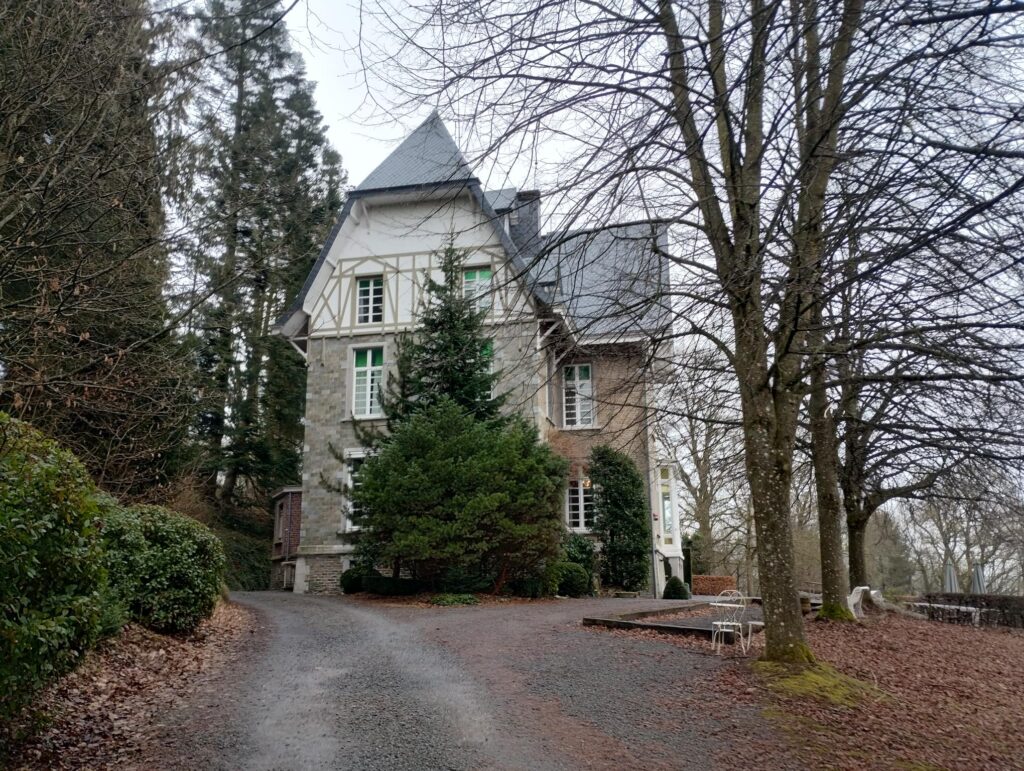
For the second time, the VERITRACE team gathered in the hills of Stavelot, Belgium, for our calendar’s signature event. From February 4th to 7th, 2025, a select group of scholars met again at the serene and welcoming Château Borzeux, seeking to recreate and expand upon last year’s workshop’s successful formula: sustained intellectual exchange, personal connection, and interdisciplinary inspiration.

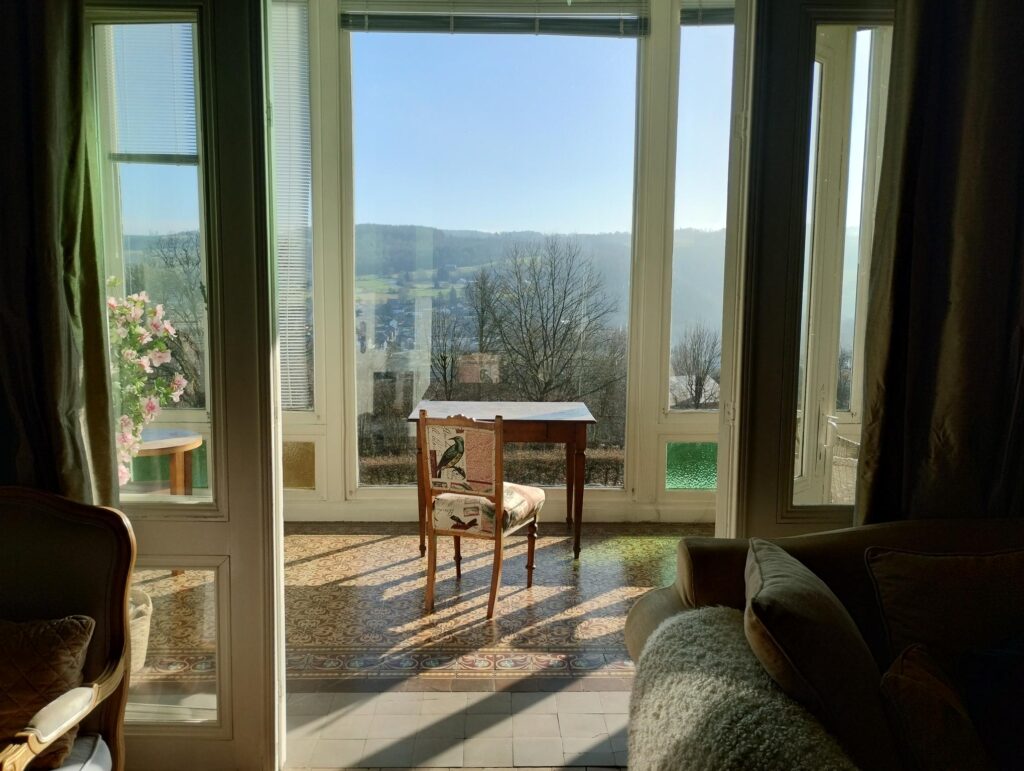
During the workshop days, we delved into the deeper currents of early modern thought, pursuing the elusive threads of prisca sapientia—that notion of ancient wisdom that coursed through the veins of Renaissance philosophy, 17th-century science and beyond. Once more, the château provided not only shelter but a space for reflection, dialogue, and discovery within an atmosphere fitting to our topic.
“Preparing for the workshop challenged me to step outside my comfort zone and explore hidden aspects of my research from a fresh perspective. I was able to identify a significant gap in the study of Russian mysticism—one that becomes especially apparent when viewed through the multifaceted framework of VERITRACE.”
Olga Čadajeva
Our programme followed a familiar rhythm: hearty breakfasts, morning and afternoon sessions, shared meals, and ‘fireside conversations’ late into the evenings. The conversations flowed freely, linking topics across sessions, from Patrizi’s Platonism to Rosicrucian circles in Moscow, from the global trajectories of Iberian modernity to the role of metaphor and the senses in early modern philosophical language. The aim was to let each speaker push the boundaries of what we thought we knew.
One highlight was Francisco Malta Romeiras’s compelling account of how early modern science was shaped by Iberian encounters with global knowledge systems. Another was Martin Žemla’s beautifully illustrated exploration of the metaphorical language of taste and beauty in Renaissance philosophy.
Steve Matthews offered a provocative reflection on the historiographical challenges faced by historians of science and philosophy: “How do we make ourselves heard in broader discussions across the humanities?”
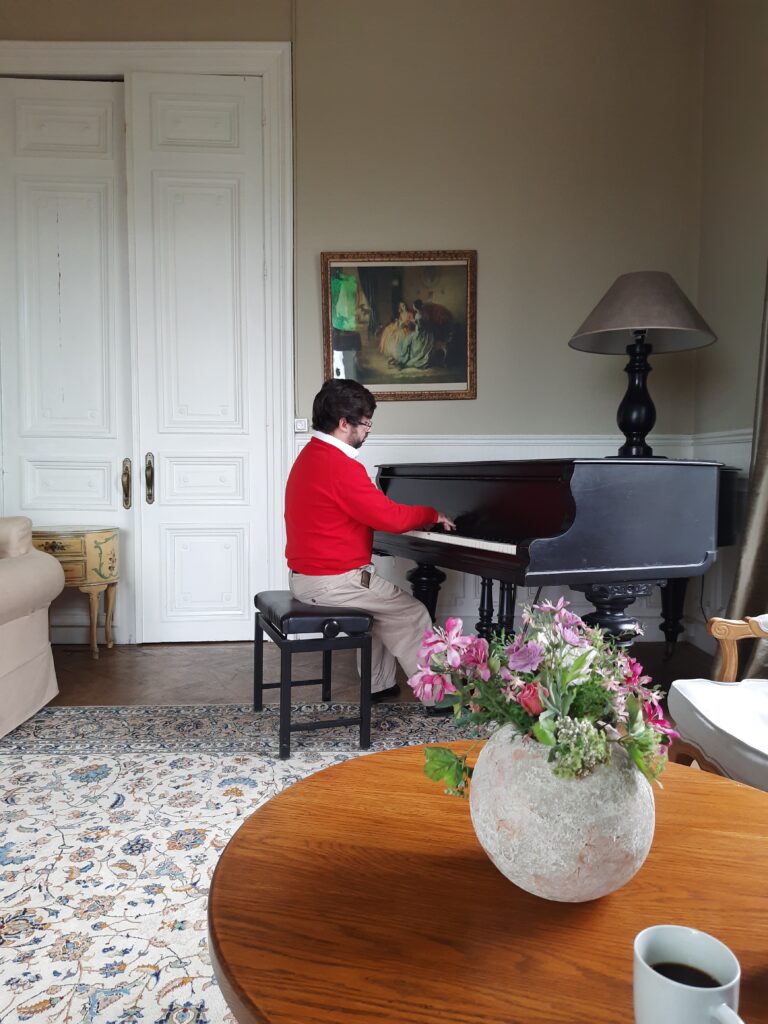
As in 2024, our collective reflections extended well beyond the scheduled talks. The format proved once again fruitful: living under the same roof, dining together, and lingering by the fire opened up a different kind of academic space—one where ideas could be questioned, deepened, and reimagined in real-time.
“Ultimately, the VERITRACE Stavelot Workshop II was not just an opportunity to exchange ideas but a catalyst for rethinking existing research paradigms. It underscored the importance of interdisciplinary collaboration in uncovering new dimensions of Early Modern intellectual history.”
Olga Čadajeva
Stavelot II also served as a field test for our growing suite of digital tools, developed by the VERITRACE team. These tools aim to trace intertextual connections and visualise the circulation of texts and concepts across time and space. These tools drew particular interest from scholars working with lesser-studied corpora and languages, such as the natural philosophy curricula of the Kyiv-Mohyla Collegium or the early Russian translations of Western mystical and philosophical texts. With new ways to proceed with the databases, what we need now are new questions, maps—and the courage to follow where they lead.
Programme Overview
- VERITRACE Slot – Schilt, Kovács, Wolf, Cantoni, Paraschos
- Patrizi’s Ancient Wisdom – Vojtěch Hladky
- Agents of Ancient Wisdom in Early Modern Russia – Olga Čadajeva
- The Global Origins of Modernity – Francisco Malta Romeiras
- Sensory Metaphors in Renaissance Thought – Martin Žemla
- Finding Truth in Bacon’s House of Mirrors – Steven Matthews
We left Stavelot with new questions, new collaborators, and a renewed sense of purpose—until next year, of course, hoping that the plan will come together again.