Nicolò Cantoni
With the beginning of year three of VERITRACE just around the corner and exciting developments to be shared soon, we would like to take a step back first.
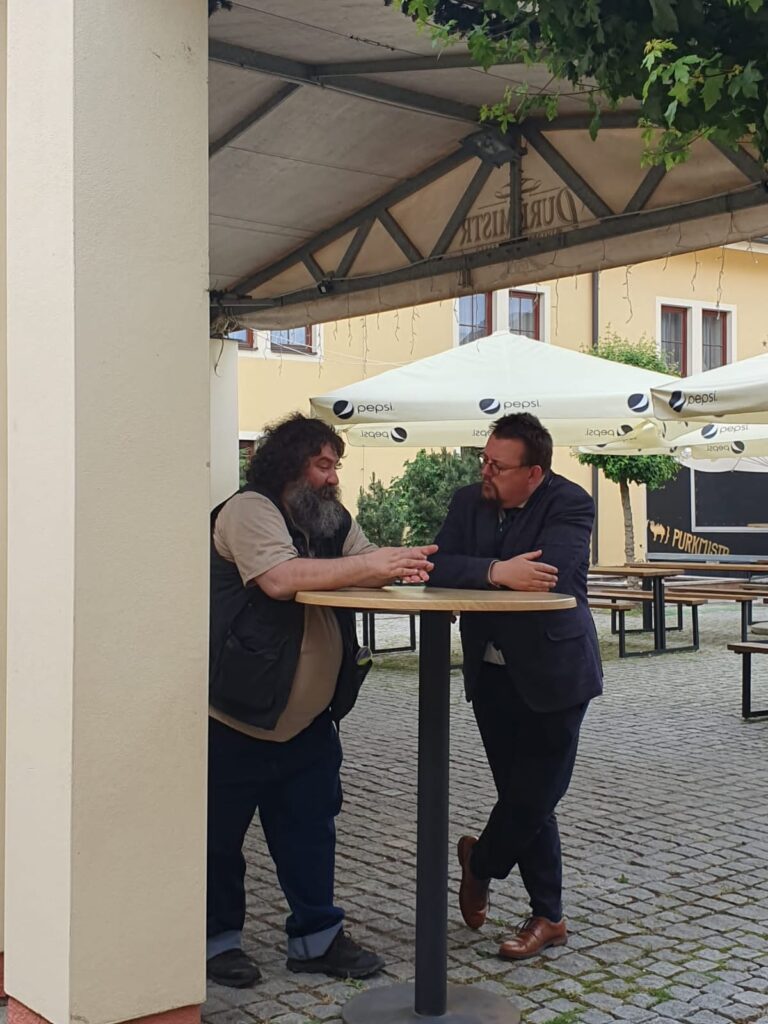
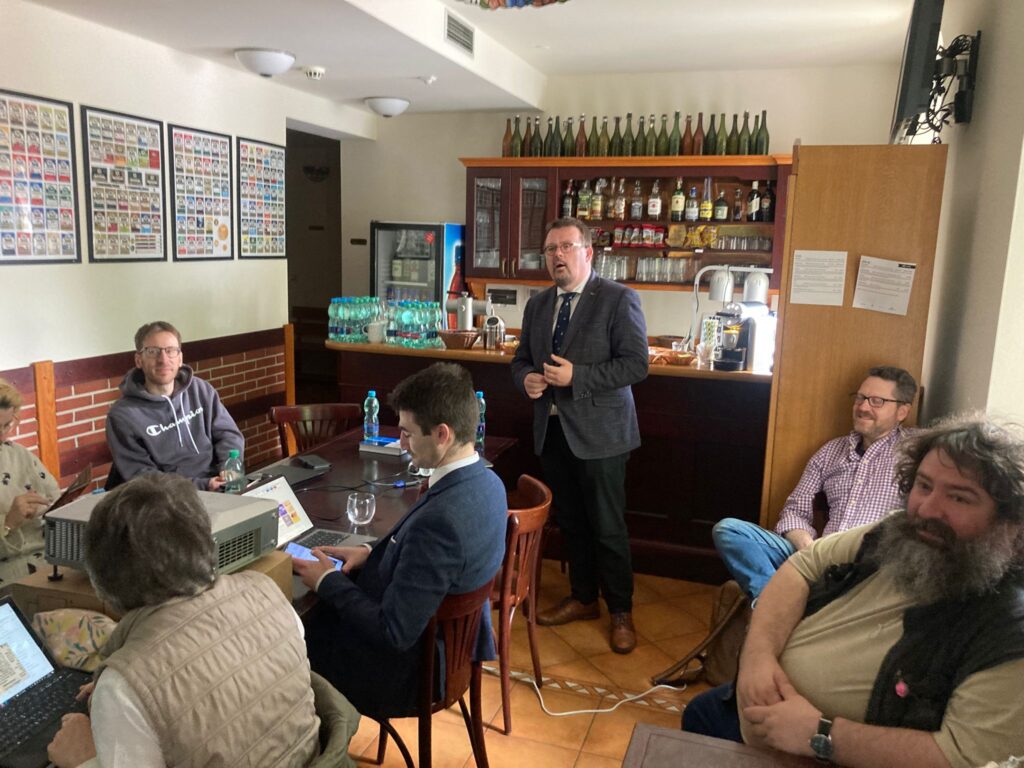
On May 26–27, our team was in Plzeň (Czech Republic) for the joint TOME–VERITRACE workshop. Co-organised by the two project leaders, Dr Peter Pavlas and our own Prof. Dr Cornelis J. Schilt, the event offered an opportunity to exchange experiences, provide feedback, and reflect on the challenges faced in digital humanities projects. The relaxed atmosphere of the Purkmistr Hotel, located on the outskirts of Plzeň, proved to be the perfect setting.

The first day, Monday 26 May, was devoted to our colleagues from TOME, with questions and feedback that sparked fertile discussion relevant to both projects. Presentations ranged from digital methods for tracing shifts in meaning across large corpora of Latin texts to the challenges of reading alchemical language through a hybrid method of close and distant reading. Visual culture was another focal point, with alchemical and Paracelsian prints revealing the intertwining of art and science in early modern thought. Religion and philosophy offered further perspectives, showing how preachers from the Unity of Brethren wrestled with biblical metaphors and how Alsted’s circle in Alba Iulia fostered intellectual networks that linked Transylvania to wider European debates.
Tuesday, 27 May, was dedicated entirely to VERITRACE. Nicolò Cantoni began with an introduction to the project and its Close Reading Corpus, the textual backbone, as well as the difficulties of systematically mapping early modern sources. With Dr Jeffrey Wolf, attention turned to the development of the VERITRACE research tool (more on this soon). His hands-on presentation gave us a first glimpse of an early but promising version of the tool that will play a central role in addressing the project’s key questions.

Ancient wisdom was then further explored in two complementary talks. Dr Eszter Kovács discussed how early modern thinkers, such as the Cambridge Platonists, drew on shared prisca sapientia sources without explicit citations, and how digital methods may help us detect these hidden fragments. Demetrios Paraschos followed with a case study on Latin versions of Orphic and Stoic poetry, testing how well the distant-reading tools can identify echoes and distinguish between variant texts.
The day closed with a forward-looking reflection by our PI, Prof. Dr Schilt, on the challenges of sustaining such an ambitious digital humanities initiative. Beyond building tools, the real task is fostering dialogue: to show colleagues across disciplines how these methods can enrich intellectual history, and to inspire future collaborations.
Together, the projects showed how traditional scholarship and digital humanities can illuminate not only the texts themselves, but also the networks of ideas and practices that shaped early modern thought. The workshop underscored once more the importance of combining close philology with digital tools in pursuing the goals of VERITRACE. We warmly thank our colleagues from TOME for their welcome, their engaging presentations, and the valuable feedback shared over the two days.

Programme Overview
- Modelling the Encyclopaedia: The Semantic Space of the Early Modern Sciences in comparison with Classical Latin and Aquinas, Petr Pavlas and Vojtěch Kaše
- Digital Text Curation and Hybrid Reading for the History of Alchemy, Jo Hedesan
- Making things visible: alchemical illustrations in 16th and 17th century prints, Jindra Kubíčková
- The Aristotelian Compass: Navigating Early Modern Rhetorica Sacra between Encyclopaedism and Homiletics, Lenka Řezníková
- The Alba Julia Constellation: Creative Interplay between Alsted and Bisterfeld in Transylvania, Márton Szentpéteri
- Inside VERITRACE: Introducing the Project and Its Close Reading Corpus, Nicolò Cantoni
- Developing the VERITRACE Research Tool: Challenges and Opportunities, Jeffrey C. Wolf
- Prisca Intertexts: Ancient Wisdom Fragments in Early Modern Works, Eszter Kovács
- Orphic Hymns and Stoic Skies: Testing Intertextuality Detection in Early Modern Latin Corpora, Demetrios Paraschos
- Zen and the Art of Motorcycle Maintenance, or, How to Tell the Others?, Cornelis Johannes Schilt